• Skip to main content
  • Skip to secondary menu
  • Skip to footer

Photo Contest

photo contest winners announced

  • Sponsored Post
  • How to Organize a Photo Competition
    • How to participate and win in photo contests
    • How to organize a photo exhibition
    • Ten Photo Contest Ideas
    • How to select judges for photo contest
    • How to market a photo contest
    • How to organize a street photography contest
    • How to organize a photo walk
    • How to organize a portrait photo contest
  • About
  • Contact

Photo Contest Entries Without Faces Skip the Model Release Problem

August 19, 2026 By PhotoContest.org Leave a Comment

Most entrants read a contest’s rules for the deadline, the file size and the prize. The clause that actually kills entries sits further down, usually under warranties, and it says something close to this: by submitting, you confirm you have obtained written permission from every identifiable person in the image. Nobody reads it until a shortlist email asks for paperwork that was never collected.
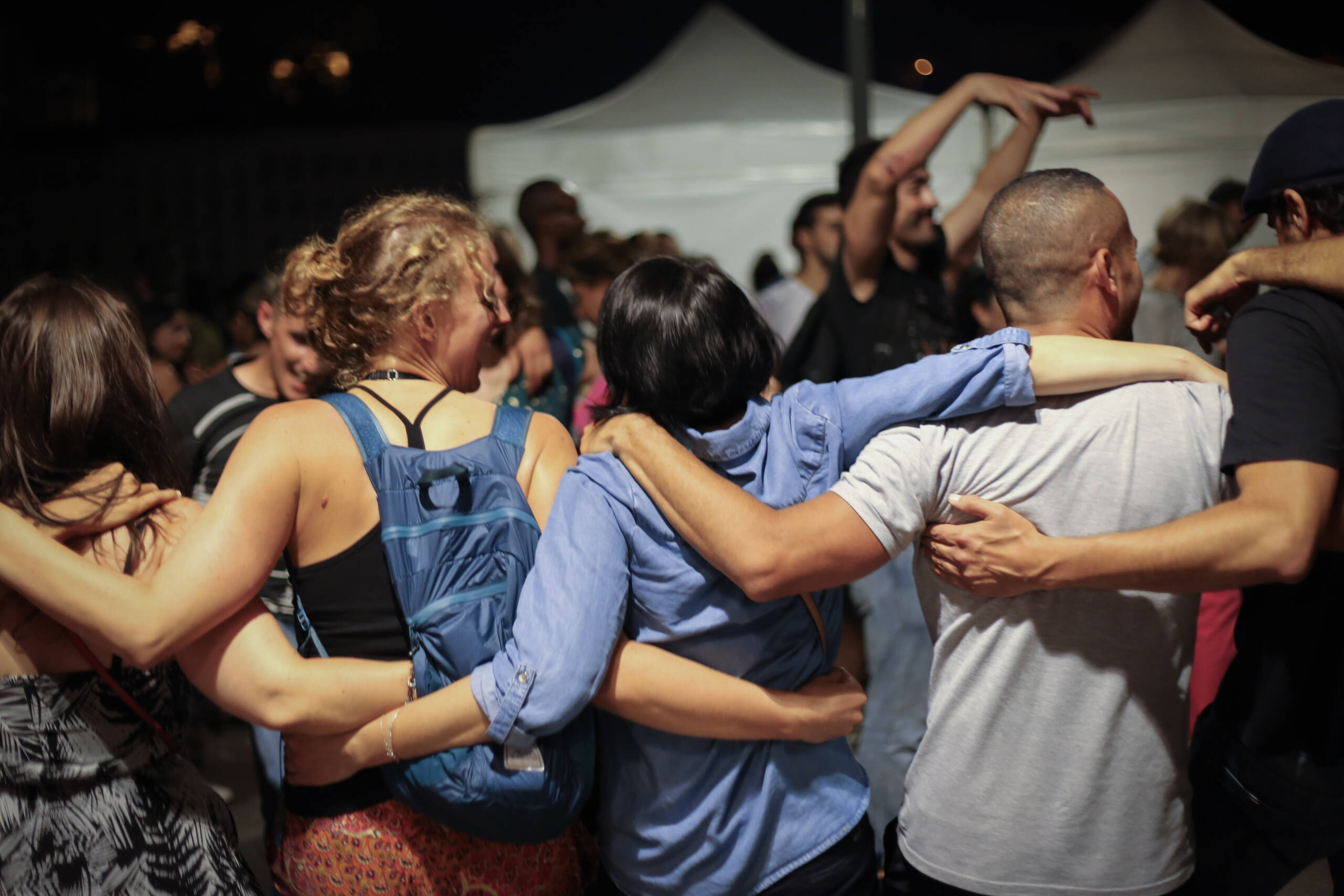
Four people linked arm in arm at a night festival, all photographed from behind

Look at the frame above. Four people, arms across each other’s backs, a marquee and a blurred crowd behind them. It carries everything a street entry needs. Warmth, movement, a diagonal of linked arms pulling the eye from left to right. And not one identifiable face. There is no release to collect because there is nobody in it a court would say is recognisable.

Why contests care when a newspaper wouldn’t

Editorial use sits in a comfortable place legally. A festival photograph published alongside coverage of the festival is news, and in most jurisdictions that carries no requirement for consent from people in a public space.

Contests are not editorial use, or not only. Read the licence you grant on entry. Organisers typically take a broad, royalty-free, worldwide licence to reproduce winning and shortlisted images in promotional material, exhibition prints, next year’s call for entries, sponsor communications and social channels. That is marketing. The moment your photograph is being used to sell something, including the contest itself, the person in it has a claim that did not exist when the same file was a news picture.

So the organiser pushes the risk onto you. The warranty clause is how. You sign it at upload, usually without noticing, and if a subject complains it is your problem and not theirs.

Recognisable is broader than faces

Turning people around does not automatically solve it, and any post that tells you otherwise is selling something.

Identifiability includes distinctive tattoos, a wheelchair, a uniform with a name badge, a band shirt from a crew of six people, a haircut in a small town. It includes context. If the caption names the event and the venue and the person is the only one there with that build and that jacket, the anonymity is thinner than it looks. Some jurisdictions, France and Germany among them, weight personal image rights heavily enough that photographers there work with a different reflex entirely. In the United States it varies state by state under right of publicity law.

The frame above survives all of that. Backs, arms, hair, a rucksack. No skin marking, no logo, no wheelchair, no badge. The one person visible in the background with his arms raised is small, soft and turned away.

Minors deserve their own paragraph. Consent has to come from a parent or guardian, contests are stricter about it than about adults, and a lot of festival crowds contain children. Shooting the backs of a line of adults removes that question too.

What this changes about how you shoot

Treat the release clause as a compositional constraint rather than an admin task, and it starts producing better pictures.

Backs force you onto gesture. Hands on shoulders, the spacing between bodies, a shoulder dropped mid-laugh. Faces are a shortcut. They tell the viewer what to feel and close the frame down. A row of linked arms leaves the story open enough that the viewer puts themselves in it, which is the thing judges describe as the picture staying with them.

Practical habits that follow from this

Work the back of a crowd rather than pushing to the front. Shoot wide open at night so the background dissolves into shape and light. Watch the edges of your frame for the one sharp face that undoes the whole approach. Keep a note of the event, date and location for your caption, because contests ask for that and a vague one looks like a photographer who was not really there.

The honest counterweight

Anonymous crowd photography is common now. A judge working through two thousand entries will see the backs-of-heads frame many times in a session, and the release advantage does nothing for you at the point where someone is actually choosing a shortlist.

What survives that stage is the same as always. Light, structure, a moment that holds. The line of arms in this frame works because it is unbroken and because the near hands are sharp while everything past them falls away. Take the release clause off your list of things to worry about, and then win on the picture.

Filed Under: Announcements

Reader Interactions

Leave a Reply Cancel reply

Your email address will not be published. Required fields are marked *

Footer

Recent Posts

  • Photo Contest Entries Without Faces Skip the Model Release Problem
  • Why I’m Paying Attention to the National Geographic Photo Camp Expansion in Washington State
  • After the Loss: What to Do With Feedback, Silence, and the Urge to Quit Entering
  • Black and White in Color Contests: When Monochrome Wins and When It Loses
  • The Submission Trap: Why Your Best Shot Is Rarely Your Strongest Entry
  • Portrait Contest Photography: Technique Versus Intimacy
  • What Judges Actually See First: The Brutal Truth About Photo Contest Scoring
  • Building a Contest Calendar: How Serious Competitors Plan Their Year
  • Contest Rights Grabs: How to Read a Photo Competition’s Fine Print
  • Street Photography Contests: What the Category Rewards and What It Punishes

Media Partners

Background Separation Is a Distance Problem Before It Is an Aperture Problem
Shooting a Griffon Vulture From Behind: Why the Back View Beats the Portrait
Night Street Photography on a Fast Telephoto: The Technical Choices Behind a Cinematic Frame
Brand Photography on the Street: Zara, Holland & Barrett, and the Logos You Cannot Control
Canon RF vs Sony E: The Platform Question Is About Lens Supply, Not Bodies
How and Why to Travel With Two Cameras: One Wide, One Mid-Tele
The Vogue Portrait Look on Budget Gear: A Reflector, an Adapted 85mm, and Better Sun
Prague Old Town Square in Flat Overcast Light: The Ultra-Wide Frame That Works
Vertical Hero Shots: Framing Tall Landmarks in Portrait Orientation
Shooting the Rialto Bridge at Night Without a Tripod

Media Partners

  • Travel Marketing
  • Prints.org
  • Media Presser
Tiny Tourism: Why Travellers Are Choosing Towns Nobody Photographs
In Defence of the Hop-On Hop-Off Bus
EasyJet Agrees £5.7bn Apollo Takeover: What Changes for Passengers and What Doesn’t
Taormina Beach Guide: Mazzarò, Isola Bella, and What Nobody Tells You About the Pebbles
Juliet’s Balcony in Verona Was Added in the 1930s and the Crowds Do Not Care
FESPA Global Print Expo ’26, 19–22 May 2026, Barcelona, Spain
FUJIFILM instax SPOT™ Brings Instant Prints to Every Experience
Collecting Japanese Prints: What to Look For and Where to Start
Shin-Hanga: The Modernist Revival of the Japanese Print
Japonisme: How Japanese Prints Rewrote Western Art
30-Year Treasury Yield Hits 5.31%, a 19-Year High, While Mortgage Rates Fall
The Defense Industrial Base Is the Story of 2026: Catapults, Motor Lines, and Capital Chasing Capacity
Manufactured for the Lens: How Product Stunts Buy Earned Media Cheaper Than Ads
Venice City Profile: Depopulation of the Historic Centre and the Access Fee Experiment
The Console Generation That Never Happened: Hardware Announced and Quietly Killed

Copyright © 2015 PhotoContest.org

Technologies, Market Analysis & Market Research Reports

We use cookies on our website to give you the most relevant experience by remembering your preferences and repeat visits. By clicking “Accept”, you consent to the use of ALL the cookies.
Do not sell my personal information.
Cookie SettingsAccept
Manage consent

Privacy Overview

This website uses cookies to improve your experience while you navigate through the website. Out of these, the cookies that are categorized as necessary are stored on your browser as they are essential for the working of basic functionalities of the website. We also use third-party cookies that help us analyze and understand how you use this website. These cookies will be stored in your browser only with your consent. You also have the option to opt-out of these cookies. But opting out of some of these cookies may affect your browsing experience.
Necessary
Always Enabled
Necessary cookies are absolutely essential for the website to function properly. These cookies ensure basic functionalities and security features of the website, anonymously.
CookieDurationDescription
cookielawinfo-checkbox-analytics11 monthsThis cookie is set by GDPR Cookie Consent plugin. The cookie is used to store the user consent for the cookies in the category "Analytics".
cookielawinfo-checkbox-functional11 monthsThe cookie is set by GDPR cookie consent to record the user consent for the cookies in the category "Functional".
cookielawinfo-checkbox-necessary11 monthsThis cookie is set by GDPR Cookie Consent plugin. The cookies is used to store the user consent for the cookies in the category "Necessary".
cookielawinfo-checkbox-others11 monthsThis cookie is set by GDPR Cookie Consent plugin. The cookie is used to store the user consent for the cookies in the category "Other.
cookielawinfo-checkbox-performance11 monthsThis cookie is set by GDPR Cookie Consent plugin. The cookie is used to store the user consent for the cookies in the category "Performance".
viewed_cookie_policy11 monthsThe cookie is set by the GDPR Cookie Consent plugin and is used to store whether or not user has consented to the use of cookies. It does not store any personal data.
Functional
Functional cookies help to perform certain functionalities like sharing the content of the website on social media platforms, collect feedbacks, and other third-party features.
Performance
Performance cookies are used to understand and analyze the key performance indexes of the website which helps in delivering a better user experience for the visitors.
Analytics
Analytical cookies are used to understand how visitors interact with the website. These cookies help provide information on metrics the number of visitors, bounce rate, traffic source, etc.
Advertisement
Advertisement cookies are used to provide visitors with relevant ads and marketing campaigns. These cookies track visitors across websites and collect information to provide customized ads.
Others
Other uncategorized cookies are those that are being analyzed and have not been classified into a category as yet.
SAVE & ACCEPT