This frame lives exactly at the intersection of lighting, fashion photography, and night, and it doesn’t try to smooth over any of the friction between them. The scene is unapologetically nocturnal: deep black background, stone architecture barely registering, a public telescope rising like an accidental sculpture in the middle of the composition. Into this darkness steps a single, harsh LED light source, handheld, low, directional, visibly present in the frame. Instead of hiding the lighting setup, the image leans into it, and that choice reshapes everything about the fashion being worn. Pastel hoodies—soft pinks that would normally belong to daylight, cafés, or clean studio backdrops—suddenly turn sharp and graphic. The fabric reflects light unevenly, creases and folds popping with contrast, logos and seams catching attention whether they want to or not. Sunglasses at night stop being a cliché and become functional armor, shielding eyes from the brutal upward angle of the light. Even skin becomes a styling element here, rendered pale and slightly overexposed, giving the models a detached, almost editorial aloofness that feels intentional rather than accidental.
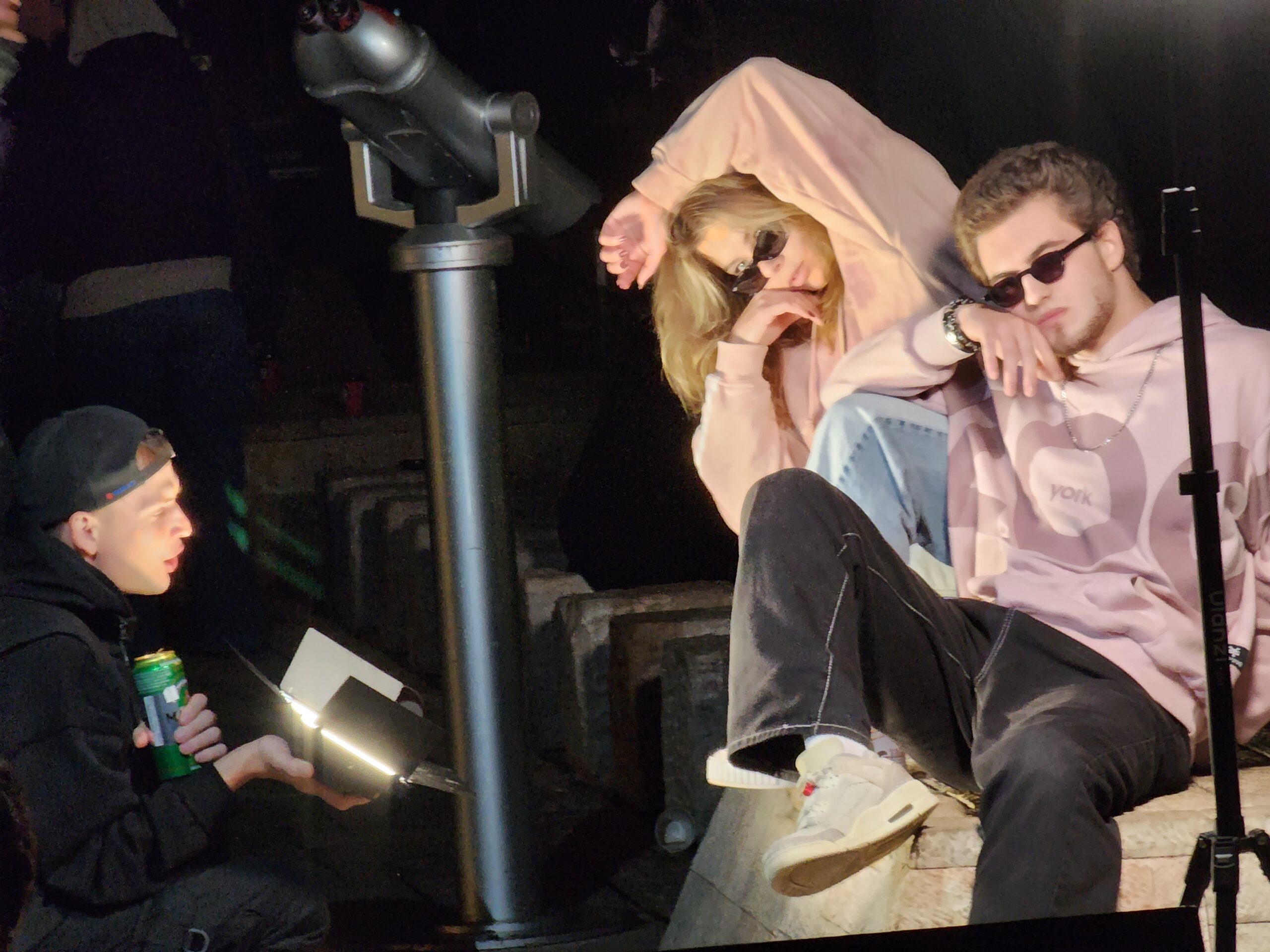
The lighting itself behaves like a character. Positioned low and close, it sculpts faces from below, exaggerating cheekbones, casting shadows upward, bending the usual rules of flattering fashion light. This isn’t beauty lighting, and it’s not supposed to be. It’s closer to street reportage lighting hijacked for style—raw, direct, impatient. Sneakers flash white, denim turns matte and heavy, and the contrast between soft clothing and hard illumination creates tension that feels very now. The presence of the person holding the light matters too: half-lit, partially visible, beer can glinting, he breaks the illusion of a closed fashion world. This isn’t a controlled set; it’s fashion happening in public space, negotiated in real time with darkness, limited gear, and whatever light is available. That honesty gives the image its edge. Night fashion photography works best when it accepts the night instead of fighting it, and here the lighting doesn’t erase the darkness—it slices through it briefly, just enough to define attitude, posture, and fabric. The result feels less like a polished campaign and more like a moment caught between friends, styled by circumstance, lit by necessity, and elevated by confidence.
Leave a Reply