Night fashion photography lives in that fragile space where control slips just enough to let atmosphere take over, and this image is a quiet lesson in why darkness can be a stylistic ally rather than a technical enemy. Two figures sit side by side, wrapped in pale pink hoodies that immediately become the visual anchor against a near-black background punctured only by distant city lights. The hoodies aren’t just clothing here, they’re shields, soft silhouettes that blur the line between streetwear and moodwear. The fabric catches stray light unevenly, creating gentle gradients instead of clean edges, which is exactly what night does best when you stop fighting it.
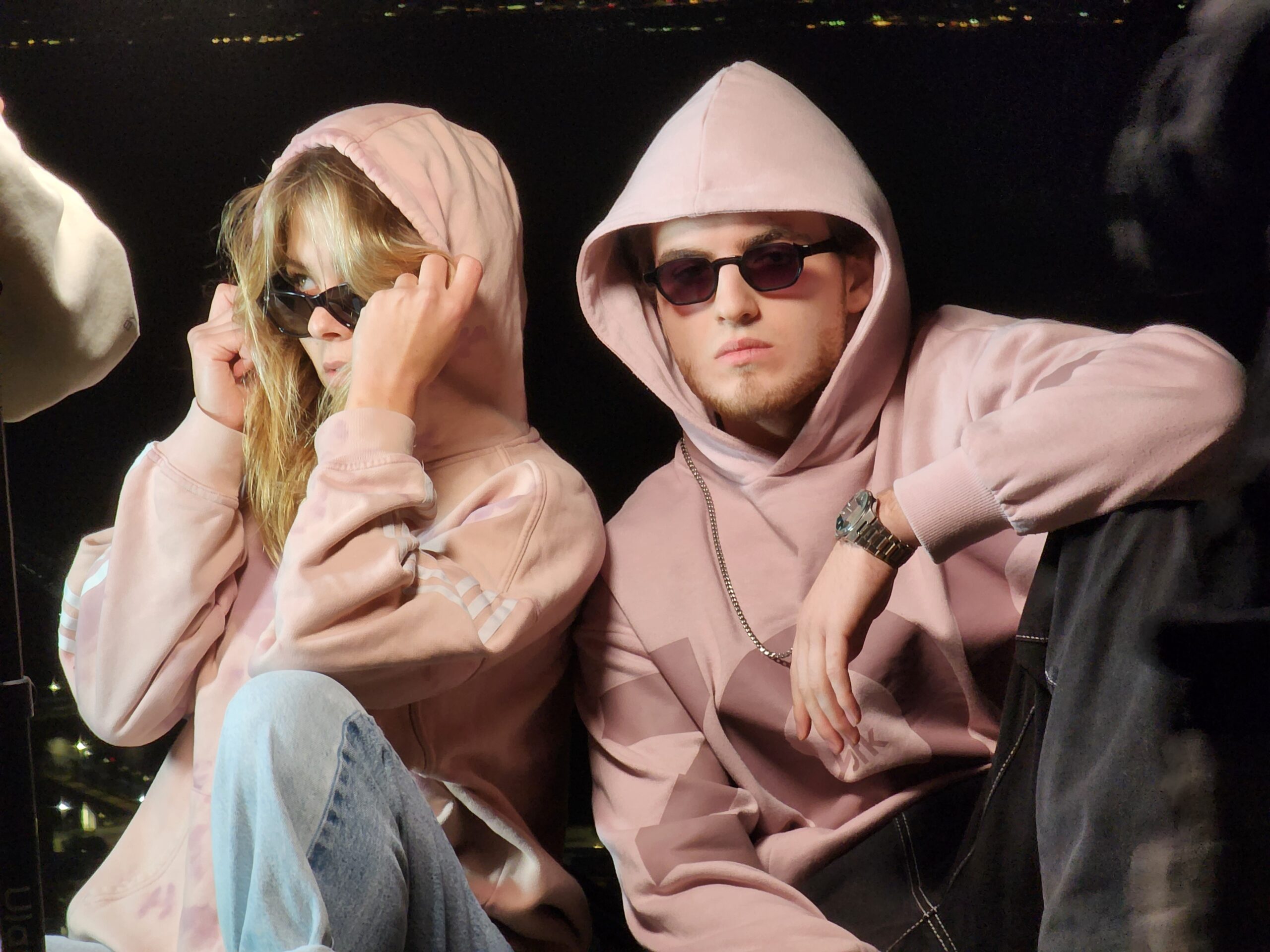
The slight motion blur is not a flaw to be corrected but a character trait. Hands lifting a hood, a knee pulled close to the body, a relaxed arm resting with a watch glinting briefly—these gestures feel mid-thought, mid-movement, as if the photographer pressed the shutter a fraction too early on purpose. Sunglasses worn after dark reinforce the idea that night fashion isn’t about clarity or explanation; it’s about attitude, anonymity, and selective visibility. Faces soften, expressions become suggestions rather than statements, and the viewer fills in the gaps. Denim and darker trousers ground the scene, while the matching pink tones create a visual dialogue that feels styled but not staged, coordinated without looking rehearsed.
This is where night photography reshapes fashion into something more cinematic. Artificial light flattens some details and exaggerates others, forcing the photographer to think less about sharpness and more about rhythm, color relationships, and posture. The city lights behind them don’t describe a place so much as a state of mind—late, quiet, slightly detached. Fashion shot at night often works best when it accepts imperfection, when it allows blur, grain, and darkness to collaborate rather than compete. The result isn’t a catalog image; it’s a memory fragment, something that feels worn-in and personal, like the hoodie itself. And honestly, that’s often where fashion photography feels most alive—when it stops trying to be precise and starts trying to be real.
Leave a Reply