Catching a scene like the one in this photo—someone standing in a bright courtyard, a travel vibe in the air, a smartphone raised for the shot—always feels like you’re stealing a little moment of a trip and tucking it away. Composing it well on a phone isn’t complicated, but there are a few tricks that make the whole thing feel more intentional and less like a quick snapshot.
A useful starting point is simply noticing the geometry around you. In this scene, the light stone tiles form a circular pattern that almost frames the woman naturally, giving her a kind of spotlight created by architecture rather than a flash. When shooting with a smartphone, nudging your angle so these lines curve behind your subject pulls the viewer’s eye right toward the center. Even a tiny step left or right can make that alignment snap into place. The same applies to the leading lines from the gate and walkway—if they converge toward the person, even subtly, the portrait feels more grounded.
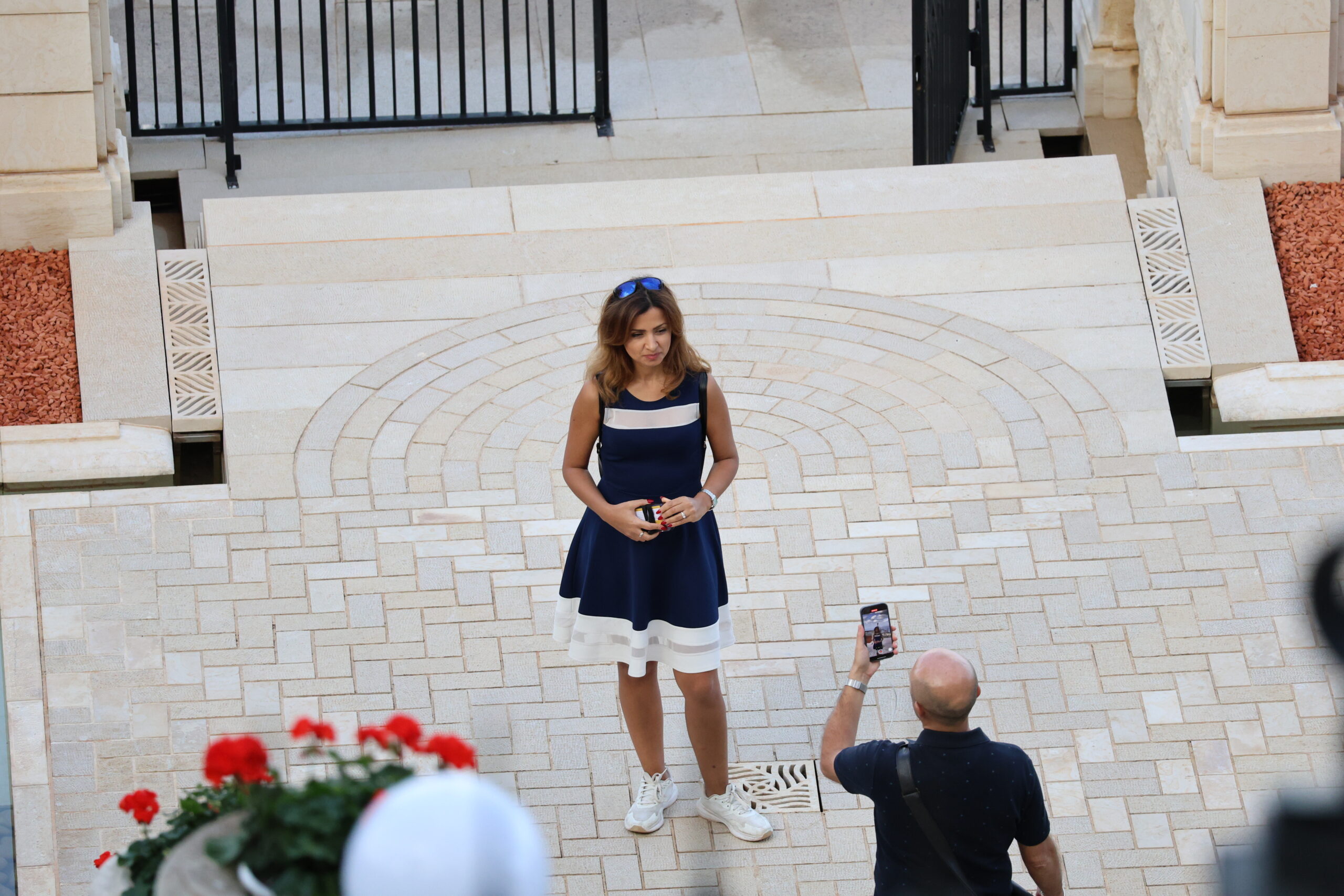
Shot with Canon R100 and a TTArtisan 50mm f/1.2
Another small but powerful habit is to shoot slightly from below or at eye level. Smartphones tend to default to a chest-height angle just because that’s where our hands naturally fall, but lowering the phone a bit makes the subject feel more present and balanced. In this scene, the photographer is aiming the phone upward, which actually flatters the subject by elongating the frame and separating her cleanly from the light paving stones. If the background is bright, tapping on the subject’s face on the phone screen helps the exposure settle where it matters.
The outfit and colors in the scene also do some of the compositional work for you. The navy dress with white stripes pops beautifully against the pale courtyard, and the sneakers add a casual “traveler off exploring” energy. Smartphones pick up color contrast well; positioning the subject so that their outfit sits against a clean, uncluttered area makes the colors read stronger. Here, the warm stone plus the faint red accents from the surrounding landscaping give just enough warmth without competing.
And then, of course, comes distance. Many people shoot too close. Stepping back slightly—even just an arm’s length more—gives the phone’s sensor room to breathe and avoids distortion, especially with wide lenses. The photographer in the photo has a comfortable distance, which keeps the perspective natural. When composing your own portrait, check the edges of the frame: any distractions? a drain grate sneaking in? a harsh shadow across the leg? Smartphones don’t hide those things, so a slight repositioning can tidy them up quickly.
Finally, keep the moment alive. Travel portraits work best when the subject isn’t frozen stiff. A relaxed stance, a mid-gesture moment, even someone adjusting their sunglasses or turning toward the light can give you that little spark that makes a picture feel lived-in rather than staged. In your image, the woman’s posture—hands lightly held, weight shifting—feels candid and honest, which is half the charm already.
If you want, I can rephrase this as a post for a travel blog or turn it into HTML with *bold* and *italic* tags—just tell me which format you prefer.
Leave a Reply